
Surveillance services
Establish the activity.
Document the facts.
Discreet surveillance for private clients, businesses, insurers and legal professionals. KEO Investigations examines movements, activity and associations relevant to your matter and reports what is observed.
Surveillance assignments
- Private & relationship matters Enquiries into relevant movements and activity.
- Corporate & workplace matters Observation directed at specific conduct.
- Insurance & legal matters Factual evidence to assist assessment and proceedings.
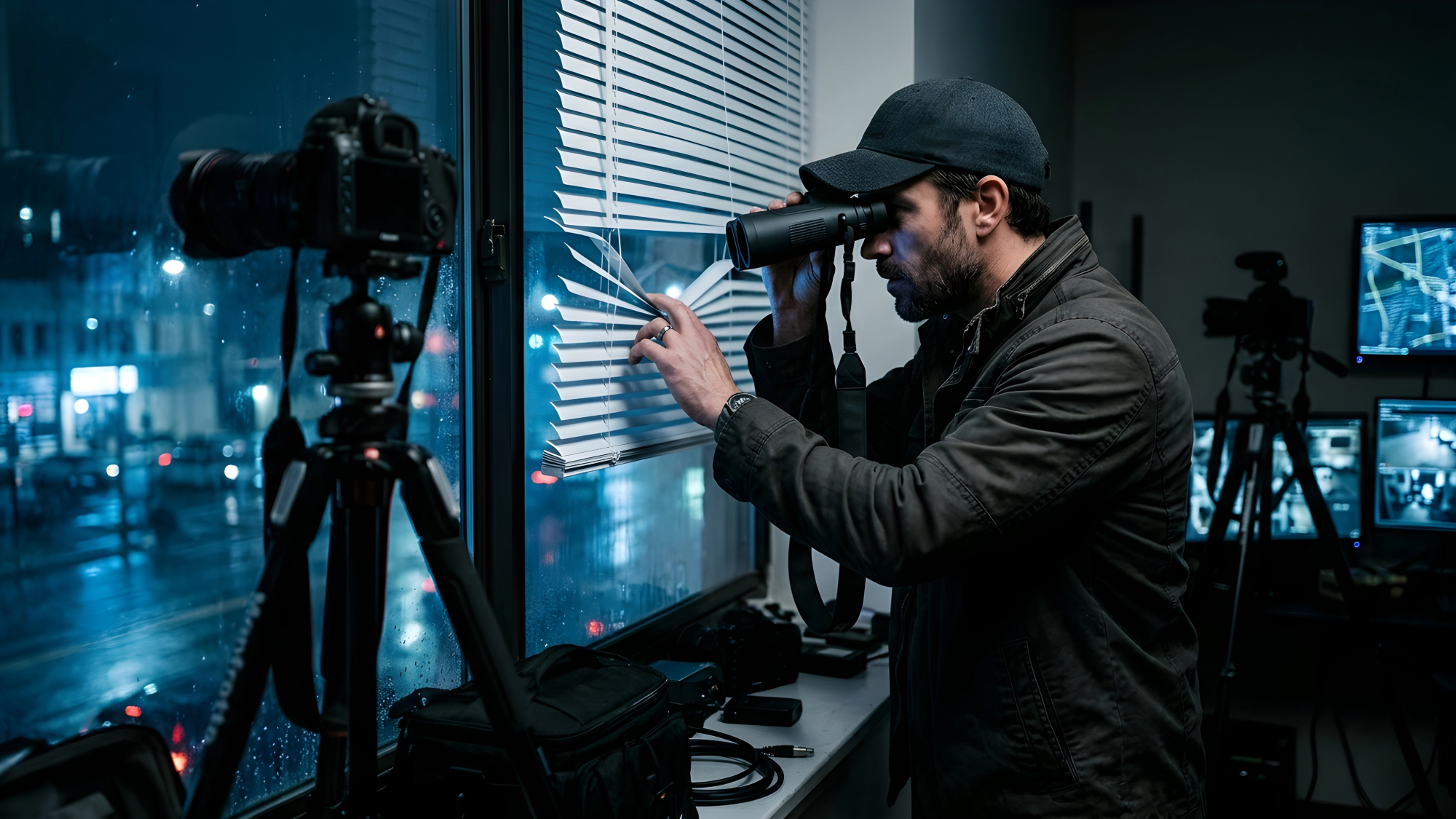
The purpose of surveillance
Answer a defined question through observation
Surveillance is most useful when the assignment has a clear objective: establish where a person goes, what activity occurs, who is present or whether particular conduct takes place.
Start with what you need to establish
Tell us the background, the activity of concern and the dates or locations relevant to the matter. Those details help define where and when observation will be useful.
Receive a factual account
The report records relevant observations and supporting material. It distinguishes what was seen from information supplied at the start of the assignment.
Who we assist
Surveillance for personal and commercial matters
The approach depends on the circumstances, location and evidence required. Each assignment is scoped around the conduct under examination.
Private & relationship matters
Discreet enquiries into relationship concerns, unexplained activity and disputed accounts of movements. Observations address the specific questions agreed with the client.
Workplace & business matters
Surveillance relating to suspected misconduct, theft, unauthorised activity or undisclosed business interests. Field observations can be assessed alongside relevant business records.
Insurance & legal matters
Observation of activity relevant to a claim, dispute or legal matter. Reporting provides a factual record for the insurer, solicitor or client to assess.
Activity, movements and associations
Depending on the objective, surveillance can document attendance at a location, travel between places, meetings, physical activity or other conduct visible during the assignment.
Location and operational coverage
Provide the proposed location when you enquire. Availability, travel requirements and any overseas component are assessed before the scope and costs are agreed.

Reporting and evidence
A record you can follow and assess
Relevant observations are recorded in sequence, with supporting images and footage identified where obtained.
Surveillance report
A chronological account of relevant activity observed during the assignment, including dates, times, locations and the circumstances of the observations.
Photographic evidence
Images documenting relevant activity, people or locations where photography is lawful and practicable.
Video evidence
Footage of relevant activity where it can be obtained lawfully and practicably, supplied with context so the recording can be understood.
Surveillance records the activity observed during the agreed period. Where visibility is obstructed, contact is lost or an observation cannot be completed, that limitation is recorded rather than filled with assumptions.
How the assignment works
From initial instructions to the surveillance report
Explain the concern
Identify the person or activity, the relevant locations and the question you need answered.
Agree on the scope
The proposed dates, operational requirements, reporting arrangements and costs are discussed before work begins.
Observe and document
Surveillance follows the agreed objective. Material changes to the assignment are discussed with the client.
Review the evidence
Receive the surveillance report and relevant photographs or video obtained during the assignment.
Preparing your instructions
Useful information for the initial discussion
Start with a brief explanation of your matter and the outcome you need from the investigation.
- The subject’s name and identifying details already known to you
- Relevant addresses, locations, vehicles and likely times of activity
- Dates, events or circumstances connected to your concern
- The questions you need answered and any reporting deadline
You do not need every detail before making an enquiry. The initial discussion establishes what information is available and what further preparation is required.
Common questions
Before arranging surveillance
How much does surveillance cost?
The cost depends on the location, duration, number of investigators required, travel and reporting needs. Scope and fees are discussed before you instruct KEO to proceed.
How long should an assignment run?
The proposed duration is based on the activity being examined and the information available. Some matters require a defined observation period; others involve more than one attendance.
Will I receive photographs or video?
Relevant photographs and footage obtained during the assignment are supplied with the reporting. The opportunity to record depends on visibility, conditions and the lawful methods available.
Can surveillance support a legal matter?
KEO can undertake surveillance directed by the factual questions in a dispute or claim. Where a solicitor is involved, reporting requirements can be agreed at the outset.
Can you guarantee a particular finding?
No. Surveillance documents the activity observed. The assignment is not designed to produce a predetermined conclusion.
Contact KEO
Discuss your surveillance matter
Send a brief description of your matter, your preferred contact method and a suitable time to reach you.